
Call for Special Session
Special Session
Special Session: Agentic AI in Higher Education: From Generative Tools to Autonomous Agents in Teaching, Learning, and the Curriculum
Generative AI has entered higher education, but the field is moving quickly from chatbots toward agentic AI: autonomous, goal-directed agents and multi-agent systems that plan, use tools, and collaborate. This special session examines what that shift means for teaching and learning across STEM, business, education, and other disciplines, including how to teach with and about agentic AI, and how faculty can responsibly integrate these tools into courses and curricula. We invite research papers, case studies, and experience reports, from foundational work on autonomous agents and human-robot interaction to concrete examples of a single course adopting AI. Newcomers and experts alike are welcome.
Agentic AI is the most consequential development in applied AI since the arrival of large language models, and 2025 and 2026 have seen autonomous, tool-using agents and multi-agent systems move from research labs into mainstream professional practice. Yet curricula across STEM, business, education, and other disciplines remain oriented around an earlier paradigm, with students prompting a chatbot for answers rather than designing, directing, orchestrating, and critically evaluating autonomous agents. This session addresses that gap directly.
The topic is timely and compelling for the WAIE community for three reasons. First, it is genuinely emerging: agentic AI reframes long-standing questions in autonomous agents and multi-agent systems for a generation of tools that did not exist two years ago. Second, it is immediately actionable for educators, who must decide now how to integrate these capabilities into courses, assessment, and program outcomes. Third, it complements rather than duplicates the existing WAIE 2026 special sessions. Where current sessions emphasize generative AI in STEM, broad implementation of AI in education, and responsible AI in computing and software development, none center on agentic AI, autonomous agents, or multi-agent systems as the organizing theme. This session occupies that open space while remaining inclusive of mainstream generative-AI classroom practice
The session aligns with WAIE’s innovation themes of emerging AI methods, human and AI collaboration, and the transformation of teaching and learning. It deliberately spans the full spectrum from foundational agentic-AI research to faculty-facing integration practice so that the conversation reaches both researchers and educators.
The session welcomes research papers, case studies, experience reports, and position papers. Topics include, but are not limited to::
- Agentic AI and autonomous agents in engineering, computing, robotics, science, business, education, and other disciplines
- Applications across disciplines, including computing, engineering, science, business, health, and education
- Multi-agent systems as learning tools, and teaching multi-agent systems
- From generative AI and chatbots to agentic workflows in teaching and learning
- Frameworks and strategies for helping faculty integrate AI into courses and curricula
- Case studies and experience reports on integrating AI into a specific course or program
- AI-assisted curriculum, course, and assessment redesign
- Human and AI, and human and robot, interaction in learning environments
- Humanoid and embodied AI for STEM engagement, outreach, and recruitment
- Responsible, ethical, and trustworthy agentic AI in the classroom
- Academic integrity, assessment, and student learning outcomes in an agentic-AI era
- Faculty development, AI literacy, and institutional capacity-building
- Preparing college graduates for an agentic-AI workforce
Inclusivity note: the session welcomes faculty from engineering and across higher education, including business, education, the sciences, and the health professions. Submissions range from foundational research on autonomous agents and multi-agent systems to a single instructor’s account of adopting an AI tool in one course. Prior agentic-AI experience is welcomed but not required to participate.
Short Biography of Organizers
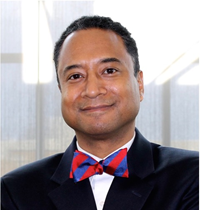
Dr Andrew B. Williams, The Citadel, The Military College of South Carolina, Charleston, USA
Andrew B. Williams, Ph.D., is Assistant Provost for Innovation and Entrepreneurship and former Dean of Engineering at The Citadel, The Military College of South Carolina, where he founded and directs the Center for AI, Algorithmic Integrity, and Autonomy Innovation (AI3). He earned his B.S. and Ph.D. in electrical engineering, with an emphasis in artificial intelligence, from the University of Kansas, and his M.S. in electrical and computer engineering from Marquette University, where he held the John P. Raynor Distinguished Chair and directed the Humanoid Engineering and Intelligent Robotics (HEIR) Lab. His research spans autonomous agents and multi-agent systems, humanoid robotics, human-robot interaction, and biomedical and educational applications of AI. He led the research and development for international RoboCup robotics teams, the “world cup” of robotics and AI, and has built humanoid robots ranging from teen-sized soccer players to assistive co-robots for workers with intellectual and developmental disabilities. He has authored and presented over 100 publications and invited talks, authored Out of the Box: Building Robots, Transforming Lives, and has secured research funding from the NSF, NIH, NASA, Google, Apple, and Boeing. He has worked in industry at Apple, GE, and Boeing. He is a former IEEE Distinguished Speaker, an inaugural AWS Education Champion, and a Business Insider Cloudverse 100 honoree. He completed the Massachusetts Institute of Technology (MIT) Professional Education programs in Applied Agentic AI and Applied Generative AI and now leads faculty AI capacity-building and agentic-AI initiatives in higher education.

Dr Jessica Higdon, Center for Excellence and Innovation in Teaching, Learning, and Distance Education (CIETL&DE), USA
Dr. Jessica Higdon is the Director of the Center for Excellence and Innovation in Teaching and Learning (CEITL) and the Assistant Provost for Teaching and Learning. Before joining the Citadel, Dr. Higdon was a high school social studies teacher in South Carolina and New Jersey for almost 20 years. Dr. Higdon has an Ed.D. in Curriculum and Instruction from Liberty University, an Ed.S. in Learning Technology and Design with a focus on Technology in Schools from the University of Missouri (Columbia), an Online Graduate Certificate in Online Education, from the University of Missouri (Columbia), a M.A.T. in Secondary Education, and a B.A . in History both from Fairleigh Dickinson University (Madison).
Submit Method:
1, submit it via the link: http://confsys.iconf.org/submission/waie2026 (after entering the link, click on the corresponding topic)
2, send your manuscript to waie_conf@126.com with subject "Submit+Special Session-4+Paper Title".