
Call for Special Session
Special Session
Special Session: Responsible AI and AI-Assisted Software Development in Computing Education
The rapid advancement of artificial intelligence (AI), particularly generative AI and intelligent coding assistants, is transforming the landscape of computing education and software development practices. Tools such as GitHub Copilot, ChatGPT, and other AI-powered development environments are enabling learners and educators to automate coding tasks, enhance productivity, and explore innovative approaches to software engineering.
Despite these benefits, the widespread adoption of AI-assisted technologies raises critical concerns regarding ethical use, academic integrity, transparency, bias, and accountability. Students increasingly rely on AI-generated outputs, creating challenges in assessing originality, ensuring deep learning, and maintaining the credibility of academic work. These developments highlight the urgent need to integrate responsible AI principles into computing education, ensuring that AI tools are used in a manner that promotes fairness, reliability, and human-centered decision-making.
This special session aims to examine the intersection of responsible AI practices and AI-assisted software development within computing education. It seeks to bring together researchers, educators, and practitioners to share innovative solutions, frameworks, and experiences that support the ethical and effective use of AI technologies in teaching programming and software engineering. The session will foster discussions on balancing technological advancement with responsibility, ensuring that students are not only proficient in using AI tools but also critically aware of their implications.
Related Topics for this Session (but not limited to):
- AI-assisted programming and coding tools in education (e.g., GitHub Copilot, ChatGPT)
- Responsible AI principles in computing and software engineering education
- Ethical implications of AI-assisted software development
- Academic integrity and originality in AI-supported programming tasks
- Fairness, accountability, transparency, and explainability (FATE) in AI systems
- Bias detection and mitigation in AI-based educational tools
- Evaluation of correctness, security, and reliability of AI-generated code
- Human-AI collaboration in software engineering education
- AI-supported debugging, testing, and code optimization
- Curriculum design for teaching responsible AI in computing programs
- Assessment strategies in AI-assisted programming environments
- Case studies on integrating AI tools in computer science classrooms
- Institutional policies and governance for AI usage in education
- Impact of AI-assisted development tools on student learning outcomes
Short Biography of Organizers
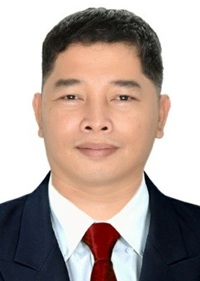
Prof. Ronel F. Ramos, FEU Institute of Technology, Philippines
Prof. Ronel F. Ramos is recognized as a faculty member of the Information Technology Department at the FEU Institute of Technology, a leading institution in Manila known for its strong emphasis on technology-driven education. As an educator, Prof. Ramos has contributed to the academic development of students pursuing careers in information technology, particularly in areas related to programming, systems development, and applied computing. His role extends beyond classroom teaching, as he is also involved in mentoring students and guiding them in practical and research-oriented projects that align with current industry demands. Throughout his academic career, Prof. Ramos has demonstrated a commitment to advancing digital literacy and technical skills among learners. He supports innovative teaching approaches that integrate theoretical knowledge with hands-on experience, preparing students for real-world challenges in the IT field. His affiliation with FEU Institute of Technology allows him to participate in institutional initiatives that promote research, collaboration, and the continuous improvement of the IT curriculum. In addition to teaching, Prof. Ramos contributes to fostering a learning environment that encourages critical thinking, problem-solving, and creativity. His dedication helps shape competent IT professionals who are well-equipped to contribute to the rapidly evolving technology sector.
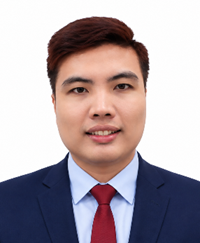
Prof. Angelo C. Arguson, FEU Institute of Technology, Philippines
Dr. Angelo C. Arguson is a Full-Time Professor in the Computer Science Department at the FEU Institute of Technology. He holds a Bachelor of Science in Computer Science and a Master of Information Technology from the Technological University of the Philippines and earned his Doctor of Information Technology from the University of the East–Manila in 2023, where his dissertation was nominated for the Best Dissertation Award. Dr. Arguson has extensive teaching experience across primary, secondary, and tertiary levels, and has held key academic leadership roles, including Program Chair for Computer Science and Multimedia Arts programs, as well as Research and Community Outreach Coordinator. He has also earned multiple professional certifications in areas such as data analytics, project management, and Python programming. His research and professional contributions span international conferences, where he has actively participated as an author, reviewer, and session chair in events such as ICSCA, ICEMT, ICAITE, ICEMT, ICoSCi, ICCMB, AAIML, MLHMI, ICIET and IC4E. His work has been presented in international venues across Asia and published in ACM and IEEE-indexed proceedings, with recognition including Best Presenter awards and Excellence in Research distinctions. Dr. Arguson’s research interests include educational technology, artificial intelligence, data science, intelligent systems, and AI-assisted software development, with a focus on integrating responsible AI practices into computing education.
Submit Method:
1, submit it via the link: http://confsys.iconf.org/submission/waie2026 (after entering the link, click on the corresponding topic)
2, send your manuscript to waie_conf@126.com with subject "Submit+Special Session-3+Paper Title".